
Ideas often feel urgent, especially when competitors appear active, and investors ask about traction. Many founders assume progress begins when development starts, yet the most consequential decisions are made long before code is written. Clarity around users, value, and measurable outcomes determines whether engineering accelerates growth or compounds confusion. Without disciplined thinking at the outset, effort expands while direction weakens.
The Cost Of Skipping Strategic Clarity
Pressure to launch quickly can push founders into building features before understanding whether those features solve a meaningful problem. Early momentum feels productive, but activity does not guarantee validation. When assumptions remain untested, development effort turns into expensive experimentation.
Lack of market need remains one of the most common reasons startups fail. That pattern often reflects insufficient product thinking before execution. Teams invest in technology without validating demand, only to discover misalignment after time and capital have already been spent.
Ignoring the importance of product thinking introduces subtle risks. Product roadmaps become feature lists rather than strategic documents. Engineering teams optimise performance before confirming relevance. Funding is consumed by iteration that could have been avoided through structured discovery.
Clarity at the beginning protects both capital and credibility.
Why Product Thinking Must Precede Development
What Changes When Founders Lead With Product Thinking?
Product thinking changes the order of decisions. Instead of starting with architecture or frameworks, founders begin by defining user pain points, behavioral patterns, and measurable outcomes. That shift reshapes how resources are allocated and how success is defined.
According to UXCam’s 2025 guide on Product Discovery Process, structured validation before development significantly reduces rework and accelerates learning cycles. The discovery process clarifies assumptions and exposes gaps before technical commitments become costly.
A strong startup product strategy connects user needs with business viability. Without it, teams struggle to prioritise effectively. Engineering becomes reactive, responding to internal opinions rather than validated insights.
Adopting a product-first approach for startups ensures that development reflects evidence rather than optimism. Interviews, prototype testing, and behavioural research inform decisions before technical implementation begins. Development then becomes execution against validated direction.
How Founders Should Approach Early Product Discovery
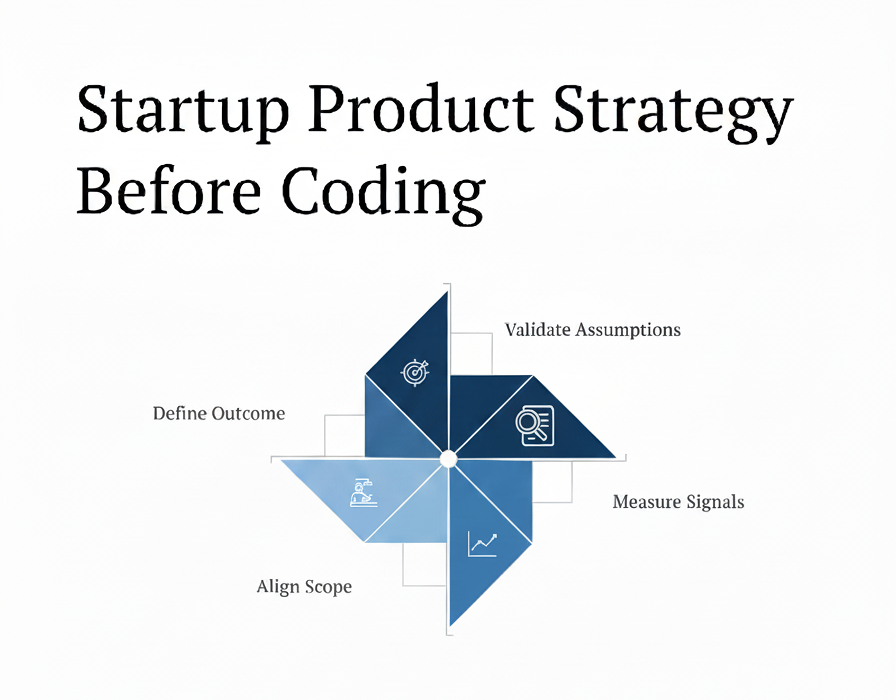
Understanding how founders approach product discovery requires separating exploration from execution. Discovery involves user interviews, market positioning analysis, and hypothesis testing. Execution involves building and shipping features.
Research from UXtweak’s 2024 guide on Product Discovery emphasises that early-stage teams who test assumptions through research methods reduce long-term pivot risk. Clear validation strengthens decision confidence.
A defined startup strategy before coding ensures that technical architecture aligns with business goals. When architecture precedes clarity, teams often overbuild flexible systems that support hypothetical use cases instead of immediate user needs.
The 2024 article by Codebridge reinforces that meaningful insight before development improves retention and product adoption outcomes. Evidence-driven discovery sharpens execution.
Careful sequencing prevents expensive redesign cycles.
Practical Product Planning Principles For Early Stage Startups
Structured planning does not delay progress; it improves the quality of progress. The following principles offer practical product planning tips for early-stage startups seeking clarity before committing to development.
- Define the Core User Outcome- Describe the primary value the product must deliver in specific terms. A precise outcome clarifies prioritisation and prevents unnecessary feature expansion.
- Test Assumptions With Lightweight Experiments- Use interviews, surveys, clickable prototypes, or landing page tests to validate demand before coding begins. Evidence gathered early strengthens confidence in the direction.
- Align Technical Scope With Validated Needs- Engineering effort should directly support proven user problems. This discipline strengthens startup product strategy and prevents architecture from drifting away from real demand.
- Sequence Development Around Risk Reduction- Build the features that validate the largest uncertainties first. This reflects mature planning and reinforces disciplined execution.
Teams that embed these principles operate with intention rather than urgency.
What Improves When Product Thinking Leads
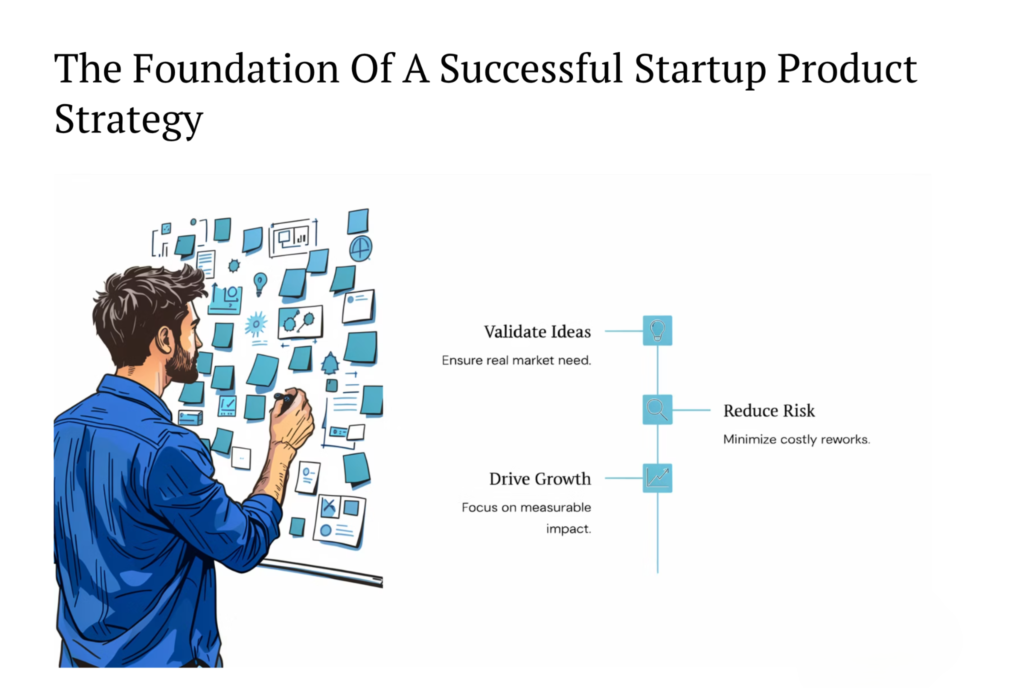
When product thinking guides development, clarity strengthens across teams. Roadmaps become structured around measurable goals. Engineering discussions focus on outcomes instead of preferences. Investment decisions align with validated learning milestones.
A disciplined product-building company integrates strategy and execution seamlessly. Discovery informs development, and development reinforces validated insight. This alignment improves reliability and execution quality.
The 2025 article by Teacode highlights that staged validation before scaling reduces technical debt and strengthens growth stability. Thoughtful sequencing enables sustainable expansion.
Confidence grows when strategy precedes code.
Final Thoughts
Writing code feels tangible, yet strategic clarity determines whether that code creates value. Founders who pause to define user problems, validate assumptions, and align outcomes position their teams for stronger execution. Speed without direction leads to repetition, while disciplined planning strengthens momentum.
A thoughtful way forward begins with structured discovery. Define the problem clearly, test core assumptions, connect value to measurable outcomes, and then invest in development that reflects validated insight. This sequence improves reliability, protects capital, and strengthens long-term performance.
Working with a Tech partner for startups can introduce structured product discovery frameworks before development accelerates. Such collaboration brings an external perspective that challenges assumptions and sharpens problem definition. Clear discovery processes help prioritise validated opportunities while filtering out distracting features. This disciplined foundation ensures that engineering effort aligns with measurable outcomes rather than internal urgency.
If you are preparing to build, consider partnering with Toolagen Technology Services as a Tech partner for startups to embed product thinking into your foundation before writing a single line of code.
FAQs
- What Is Product Thinking And Why Is It Important?
Product thinking is a structured approach that prioritises user needs, measurable outcomes, and business viability before development begins. Its importance lies in reducing wasted effort and improving alignment between strategy and execution.
- How Should Founders Plan Before Writing Code?
Founders should validate the core problem, test assumptions, define success metrics, and outline a clear startup strategy before coding. Structured discovery improves clarity and reduces rework.
- What Is The Difference Between Product Thinking And Development?
Product thinking defines what should be built and why. Development determines how it is built. Strategy shapes direction, while engineering executes within defined priorities.
- Can Skipping Product Thinking Hurt My Startup?
Yes. Ignoring structured discovery often results in feature creep, misaligned priorities, and delayed product market fit. Weak early decisions become expensive to reverse.
- How To Integrate Product Strategy Into Early Stage Startups?
Integration begins with disciplined discovery and outcome-based planning. Partnering with a startup product-building partner like Toolagen Technology Services helps embed structured frameworks that connect strategy with execution.