
Building a SaaS product often begins with a rough estimate and an optimistic sense of what can be achieved within a set budget. As planning moves forward, founders usually realize that cost is influenced by far more than development hours alone. Decisions around scope, validation, team structure, and long-term maintenance quietly shape outcomes long before launch. This discussion examines where expenses truly originate, why they frequently exceed expectations, and how a structured approach creates financial clarity without compromising execution quality.
Why SaaS Costs Often Surprise Founders
Early planning conversations tend to focus on visible line items such as design and development, while less obvious expenses remain unaddressed. Many teams underestimate how quickly startup costs grow once infrastructure, testing, iterations, and ongoing support are factored in. As timelines extend, these overlooked elements compound and create pressure on budgets that were never designed to absorb them.
Founders also face difficulty comparing estimates because pricing varies widely depending on experience level, engagement model, and technical complexity. Engaging SaaS product development services without a clear understanding of cost drivers can lead to misaligned expectations, delayed delivery, or unnecessary trade-offs later in the process.
Where Cost Risks Commonly Emerge
Cost overruns rarely happen all at once. They tend to appear gradually through small decisions that feel reasonable in isolation. Scope expansion during development, unclear validation milestones, and delayed feedback cycles slowly inflate startup SaaS expenses while reducing predictability.
When a team partners with an MVP development company but lacks clarity on validation goals, the build often grows heavier than intended. Instead of answering key market questions, the product absorbs features that increase complexity and cost without improving decision confidence. Over time, this erodes the original purpose of an MVP and makes corrections expensive.

What Actually Drives SaaS Product Costs?
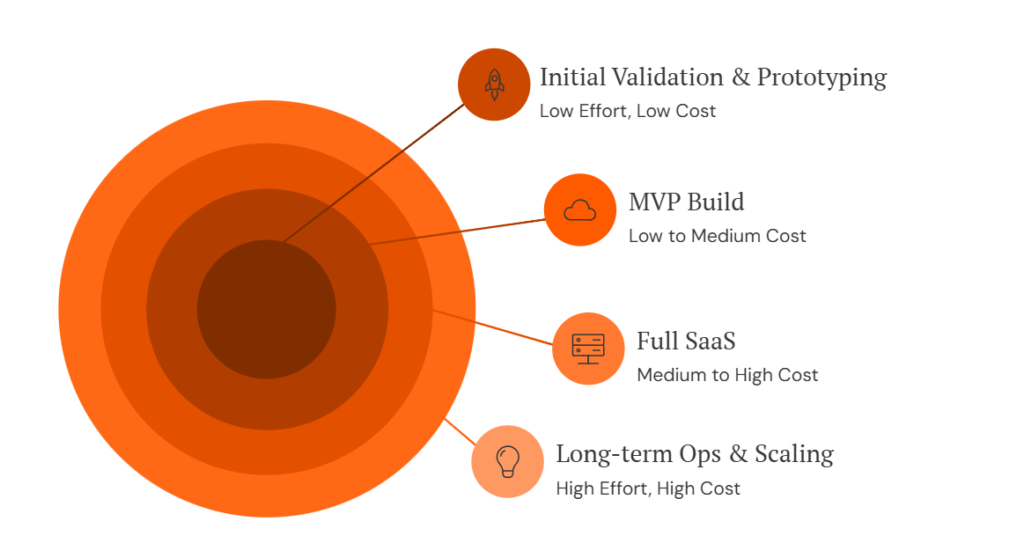
SaaS costs accumulate through a combination of technical, operational, and strategic factors rather than a single development phase. Initial planning and design represent only a fraction of total spend, while backend architecture, integrations, security, and post-launch refinement steadily add weight. According to a detailed breakdown of SaaS product development costs, a focused MVP may range between sixty thousand and one hundred twenty thousand dollars, while more mature products can exceed two hundred thousand, depending on scalability and complexity. (Source)
Beyond development, teams must account for hosting, monitoring, maintenance, and iteration cycles. These recurring commitments are often underestimated during early budgeting, which is why understanding the true cost of building an MVP requires a lifecycle perspective rather than a launch-focused view.
Key Cost Drivers Founders Should Plan For
The following cost drivers highlight where planning discipline has the greatest impact on financial control and long-term sustainability during SaaS development:
- Product Scope Discipline– Clear prioritization directly controls spend. Teams that define validation goals early avoid unnecessary features and maintain control over the cost breakdown of SaaS products. This discipline preserves flexibility and reduces rework later.
- Technical Architecture Choices– Early architectural decisions influence scalability and maintenance costs. Selecting frameworks and infrastructure without long-term consideration can increase future expenses tied to performance and reliability.
- Team Structure and Engagement Model– Cost efficiency depends on how responsibilities are distributed. A well-aligned external partner often reduces coordination overhead compared to fragmented hiring, especially during early stages of budgeting for startups.
- Iteration and Feedback Cycles– Frequent feedback reduces waste. When validation signals are delayed, teams invest in assumptions that later require correction, increasing overall spend.
What Improves With Structured Cost Planning
Applying disciplined planning transforms how founders experience cost management. Instead of reacting to unexpected expenses, teams gain visibility into tradeoffs and timing. This clarity enables better prioritization and steadier execution.
Research outlining SaaS product development costs shows that products with defined MVP scopes and phased growth strategies experience fewer late-stage surprises and smoother scaling paths. (Source)
When teams understand how costs accumulate, conversations shift from reduction to optimization. A well-scoped MVP supported by a capable partner reduces uncertainty and strengthens financial confidence across development cycles.
Aligning Budget With Long-Term Value
Sustainable SaaS growth depends on aligning spending with learning outcomes rather than feature volume. Founders who evaluate startup costs through the lens of validation gain clearer signals earlier and avoid heavy reinvestment later.
An independent analysis of SaaS build stages highlights that MVP-focused development often starts between thirty thousand and eighty thousand dollars, while mid-scale and enterprise builds rise significantly as complexity increases. (Source)
Understanding these ranges helps founders plan realistically and choose partners who align with their stage rather than overbuilding prematurely.
Bottom Line
Financial clarity emerges when cost conversations are grounded in structure and intent rather than optimism alone. Teams that approach development with defined milestones, disciplined scope, and transparent communication experience fewer disruptions and better outcomes.
For founders seeking dependable planning and execution support, working with Toolagen Technology Services provides a structured approach to cost management that balances validation, quality, and long-term reliability.
FAQs
- How much does it cost to build a SaaS product?
Costs vary widely based on scope and complexity. A focused MVP may range from thirty thousand to one hundred twenty thousand dollars, while advanced platforms require significantly higher investment. Toolagen Technology Services helps founders align spending with stage-appropriate goals.
- What are the hidden costs in startup development?
Common hidden costs include infrastructure, maintenance, rework from unclear requirements, and delayed validation. These often contribute heavily to rising startup SaaS expenses if not planned early.
- How do MVP and SaaS costs differ?
MVPs focus on validation and learning, while full SaaS products emphasize scalability and robustness. This difference explains why the true cost of building an MVP is substantially lower when scope discipline is maintained.
- Can I reduce costs without sacrificing quality?
Yes, prioritizing validation, defining clear milestones, and choosing the right partner, like Toolagen Technology Services, emphasizes structured planning to preserve quality while controlling spend.
- How should I budget for early-stage SaaS development?
Budgeting should account for development, validation, infrastructure, and iteration cycles. A phased approach to budgeting for startups improves predictability and reduces financial stress during growth phases.