
Ambition fuels every startup, yet many promising ideas never reach their first release. Founders invest time, capital, and conviction into building something meaningful, only to discover that momentum fades before the product reaches users. Behind every stalled launch lies a pattern of decisions, assumptions, and overlooked priorities that quietly contribute to startup failure, long before the market ever sees the product.
When Launch Plans Break Down
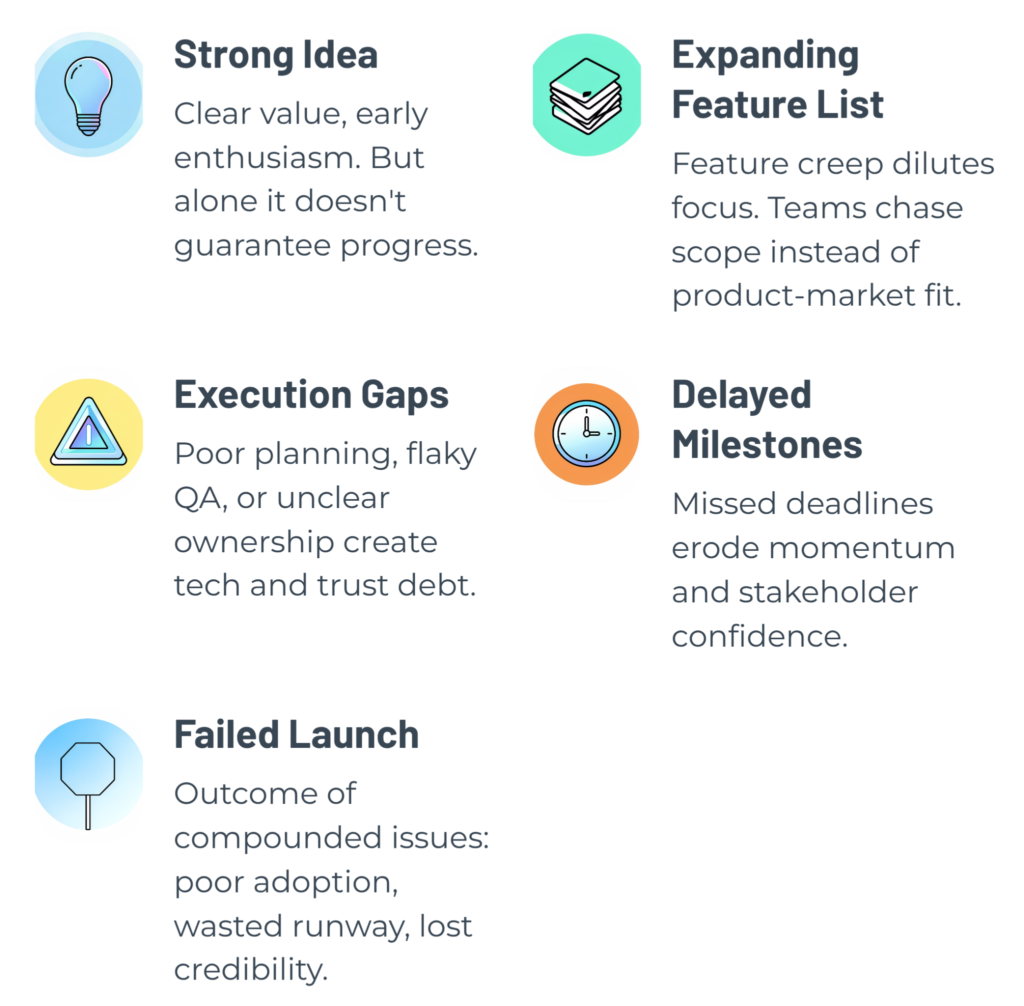
Founders rarely intend to delay their own launch. Most setbacks emerge gradually through unclear priorities, shifting requirements, and underestimated effort. During early growth phases, enthusiasm can overshadow discipline, and small inconsistencies compound over time.
According to CB Insights, lack of market need remains the leading reason startups shut down, accounting for 42 percent of failures. When validation is weak or assumptions go untested, teams build features that do not solve urgent problems, which often leads to abandoned releases and MVP launch failures. (Source)
Execution gaps often become visible only when deadlines begin slipping. Unclear ownership, underestimated technical complexity, and weak governance structures create compounding delays that are difficult to reverse mid-cycle. Research from McKinsey highlights that large-scale technology initiatives frequently exceed timelines and budgets when accountability and structured oversight are insufficient, reinforcing how early execution discipline directly influences product delivery outcomes. (Source)
In many cases, early-stage execution gaps are not caused by lack of talent but by lack of structure. Teams move quickly without defined milestones, measurable learning objectives, or clear accountability. As a result, progress appears steady until integration, testing, or validation exposes deeper issues that delay launch readiness.
Why Do So Many Startups Struggle To Launch?
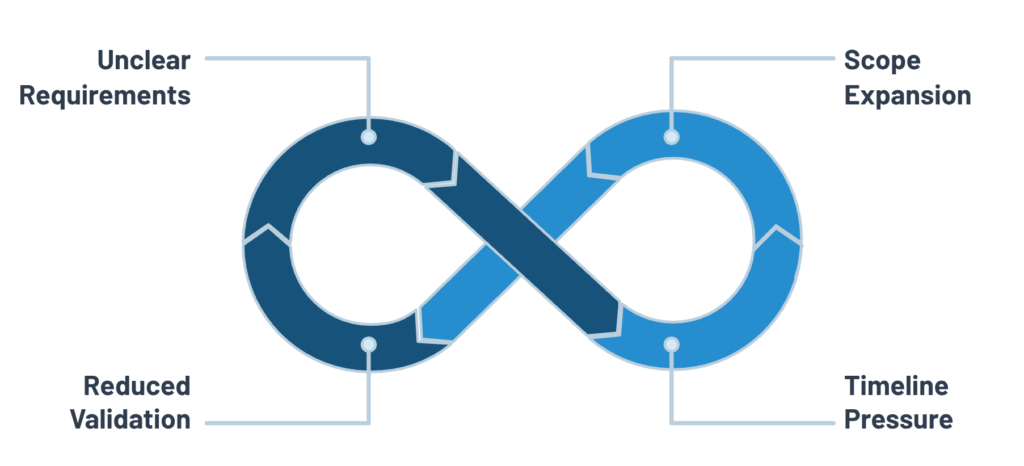
Startups struggle to launch because early planning often emphasizes vision over operational sequencing. Without structured validation cycles, realistic timelines, and disciplined scope management, development becomes reactive instead of strategic.
A product idea may be strong, yet common founder mistakes, such as expanding feature lists prematurely or avoiding difficult prioritization decisions, can derail timelines. When founders attempt to perfect every aspect before release, momentum slows and resources thin out. Without a deliberate MVP framework, teams risk building extensively without reaching a usable version that gathers feedback.
Engaging a capable startup product development partner early can introduce disciplined milestone planning and structured testing cycles. Similarly, collaborating with an experienced MVP development company helps transform assumptions into measurable experiments rather than extended build cycles driven by optimism alone.
Practical Principles To Reduce Launch Risk
The following strategies reflect startup lessons learned from ventures that either stalled or accelerated to launch:
- Define a Focused Launch Objective- Setting a narrowly defined first release goal keeps development centered on critical value delivery. When the objective is clear and measurable, teams align around execution priorities rather than second-guessing what’s important.
- Document Requirements Before Execution Begins- Poor planning is a leading cause of project disruptions. Structured requirement documentation and early validation protect teams from scope creep and prevent cycles of rework that delay launch or compromise quality.
- Prioritize Lean Feedback Cycles- Staying connected with early adopters and collecting feedback at each iteration prevents wasted effort on features that do not resonate with users. These cycles improve decision quality and prevent teams from overengineering solutions.
- Integrate Strategic And Technical Planning- Execution gaps frequently arise where business intent and technical planning remain disconnected. Collaboration with a specialized MVP development company creates alignment between vision and feasibility, leading to a realistic sequence of priorities that supports launch readiness.
What Improves When Execution Is Strengthened
When execution gaps are addressed deliberately, the product development process becomes more predictable and agile. Teams gain clarity around deliverables and reduce unnecessary friction, allowing work to focus on validated outcomes rather than open-ended enhancement cycles. This clarity enhances communication between product owners, engineers, and stakeholders, creating an environment where progress can be observed, measured, and improved systematically.
Working with an experienced startup product development partner reinforces these dynamics by bringing practiced workflows that balance ambition with disciplined delivery. Structured collaboration nurtures rhythm in planning, execution, and review, which translates into consistent launch progress rather than reactive retracing.
Bottom Line
Products seldom fail because ideas lack merit. Instead, startup failure to launch is often rooted in execution gaps, unclear priorities, and a lack of disciplined validation before development begins. Planning, defined goals, and responsive iteration shape a pathway that supports progress rather than inertia.
A way forward involves embracing disciplined execution frameworks, validating assumptions early, and aligning technical planning with product intent. For founders working to launch with confidence, partnering with an expert co-building partner like Toolagen Technology Services can offer the structured support necessary to align strategy with delivery and turn early ambition into successful first product releases.
FAQs
- Why Do Many Startups Fail To Launch Their First Product?
Many ventures struggle because planning lacks definition, requirements are unclear, and priorities shift without measurable checkpoints. These issues create execution gaps that stall progress and increase the chance of MVP launch failures.
- What Are Common Execution Gaps In Startups?
Common gaps include scope creep, misaligned expectations between roles, unclear requirements, and insufficient feedback loops. These issues often lead to delays and fragmented development cycles.
- How Can Founders Avoid Early Mistakes?
Founders can reduce risk by setting clear launch objectives, validating assumptions through early feedback, and documenting requirements before development begins. Collaboration with an experienced startup product development partner like Toolagen Technology Services strengthens planning discipline.
- Does Co-Building Help Launch Products Successfully?
Yes. Co-building startups for success creates shared accountability and aligns product vision with execution capability. An experienced partner adds operational discipline, improving the likelihood of a successful first launch.
- What Is The Role Of MVP In Preventing Failure?
A focused MVP prioritizes solving a core user problem with minimal complexity. Partnering with a trusted MVP development company supports rigorous validation, early learning, and iteration that prevent common launch obstacles associated with startup failure.