
Clarity at the beginning of a product journey determines how confidently a team can execute later. Many founders begin with a strong idea and genuine conviction about the problem they want to solve, yet the moment planning begins, complexity starts to creep in. Decisions multiply, features expand, and priorities blur. Strong product scoping brings structure to that early momentum, ensuring the vision remains focused and the path forward remains practical rather than overwhelming.
When Product Scope Expands Beyond Control
Early excitement often leads to expanding feature lists that attempt to satisfy every possible user need. Teams add enhancements before validating fundamentals, believing that additional functionality will increase value. In reality, excessive complexity can dilute core purpose and strain limited resources.
Recent data shows that 42 percent of startups fail because there is no market need for the product, which often stems from unclear scope and unvalidated feature decisions. When teams expand functionality before validating core value, resources are consumed without measurable traction. (source)
Founders frequently experience uncertainty when trying to balance ambition with feasibility. Pressure from stakeholders, internal enthusiasm, and competitive comparisons often result in avoiding overcomplicated products becoming an afterthought rather than a priority. Hidden risks include technical debt, unclear ownership, bloated timelines, and a loss of strategic direction that makes pivots far more expensive.
Why Does Product Scoping Often Become Overcomplicated
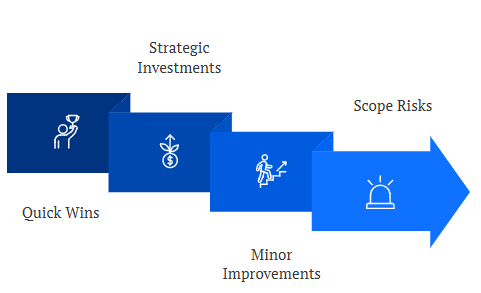
Product complexity rarely begins intentionally. It emerges when teams lack clear evaluation criteria for deciding what belongs in the first version. Without structured decision making, every idea appears equally valuable, and trade-offs become emotionally driven rather than strategically grounded.
Project management research shows that unclear requirements are among the leading causes of project failure and budget overruns. Poorly defined scope increases the likelihood of missed deadlines and execution inefficiencies, particularly in early-stage development. (source)
Disciplined MVP scoping strategies create boundaries that protect focus. These strategies connect every feature to a learning objective, ensuring that development effort aligns with validation rather than speculation. Clear scoping strengthens startup product clarity, allowing teams to communicate direction with confidence across engineering, design, and leadership.
Practical Principles For Simplifying Product Scope
The following principles reflect proven product scoping best practices that help teams maintain direction while progressing efficiently:
- Define a Single Core Outcome- Begin by identifying the primary problem the product must solve in its initial release. This decision creates a clear evaluation lens for every proposed feature. When each addition is measured against that single outcome, simplifying product scope becomes a deliberate process rather than an afterthought.
- Apply Structured Feature Evaluation– Clear feature prioritization tips, such as impact versus effort analysis or value-based scoring, prevent subjective decisions from driving scope expansion. Each feature should justify its inclusion by contributing measurable learning or solving a core user challenge. This approach reinforces disciplined product scoping while maintaining strategic intent.
- Limit Initial Complexity in Architecture– Technical decisions should support simplicity during early development. Over-engineered systems introduce maintenance burdens and slow iteration cycles. Controlled scope ensures that infrastructure grows alongside validated demand rather than speculative requirements.
- Align Stakeholders Around Scope Boundaries- Internal alignment is essential for preventing unplanned additions. Shared documentation and transparent criteria help maintain focus, especially when working with a startup product development partner or external collaborators. Alignment reduces friction and preserves execution momentum.
What Changes When the Scope Is Clear
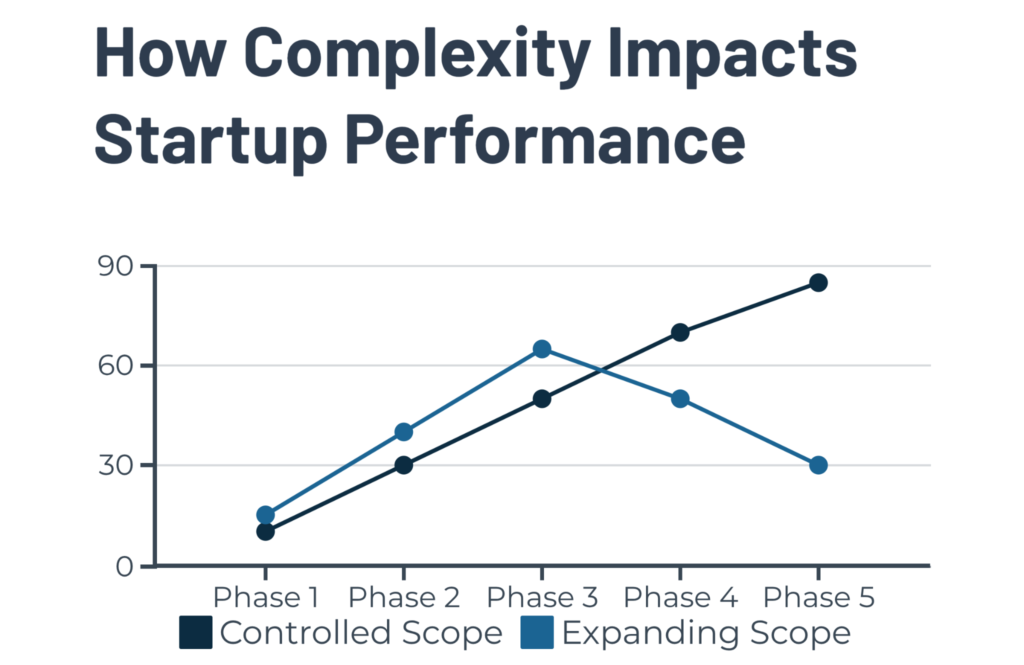
When the scope is defined with intention, development becomes more predictable and reliable. Clear boundaries enable teams to concentrate on execution quality instead of constant redefinition. Iterations accelerate because decisions are anchored in structured evaluation rather than reactive adjustments.
Improved scope discipline strengthens collaboration with any product-building company, ensuring that engineering and strategy move in the same direction. Teams gain measurable progress, clearer timelines, and improved communication across departments. Clarity in scope also improves stakeholder confidence because roadmaps reflect thoughtful prioritization rather than unchecked expansion.
Strategic scope management enhances adaptability as well. When feedback arrives, adjustments can be made with precision instead of disruption. Rather than revising an overloaded system, teams refine a focused foundation that was built intentionally.
Bottom Line
Scope is not a limitation; it is a deliberate strategic decision. The most successful early-stage products are rarely the result of broad ambition; they emerge from teams that established clear priorities early and maintained that clarity under the pressures of execution. In fast-moving environments, that kind of discipline is difficult to sustain without the right structures in place.
What distinguishes products that gain meaningful traction from those that lose momentum is not always resources or market timing; it is the organizational commitment to validate before building, to define success in measurable terms, and to treat unresolved ambiguity as a risk rather than an acceptable condition. A well-defined scope provides teams with a consistent reference point for decision-making, a foundation for meaningful iteration, and a standard against which progress can be honestly evaluated.
For startups working to build that foundation, partnering with an experienced product development firm such as Toolagen Technology Services can provide the structural guidance needed to translate early-stage vision into a focused, executable roadmap, one that supports confident decision-making and sustainable growth throughout the development process.
FAQs
- How Do I Scope A Product Without Overcomplicating It?
Begin by defining the single most important problem the product must solve, and evaluate every feature against that objective. Structured scoring frameworks and clearly documented assumptions support disciplined product scoping decisions.
- What Is Feature Prioritization And Why Does It Matter?
Feature prioritization is the process of ranking features based on impact, effort, and alignment with business goals. Applying clear feature prioritization tips ensures development effort supports validated learning rather than speculative expansion.
- How To Balance MVP Simplicity With Core Functionality?
Balance emerges when MVP scoping strategies focus on solving one meaningful user problem exceptionally well. Maintaining startup product clarity helps prevent unnecessary features from diluting the core experience.
- Can Overcomplicating a Product Hurt My Startup?
Excessive scope increases development time, cost, and technical complexity. Consistent focus on avoiding overcomplicated products protects the runway and improves adaptability during early iterations.
- What Tools Help With Product Scoping?
Frameworks such as impact effort matrices, value scoring models, and shared documentation platforms improve decision transparency. Collaboration with a product-building company like Toolagen Technology Services can further reinforce structured product scoping best practices during early planning.