

Ambition drives every startup, yet ambition without structure often turns product timelines into moving targets that strain teams and test investor patience. Founders carry vision, responsibility, and urgency all at once, which makes it difficult to separate optimistic expectations from practical delivery capacity. Building realistic product timelines for startups requires disciplined planning, transparent communication, and a clear understanding of how execution actually unfolds in early-stage environments.
Why Timelines Slip More Often Than Founders Expect
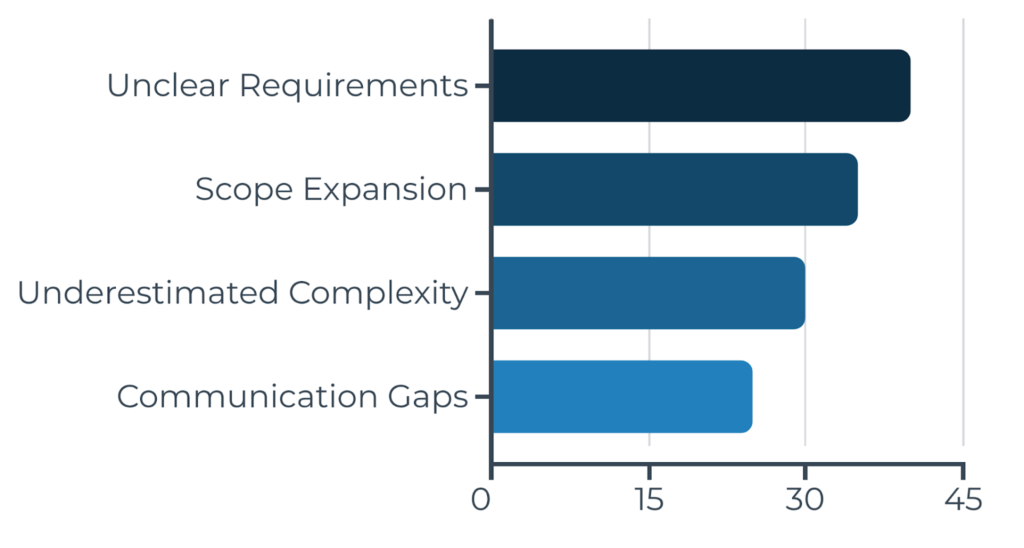
Missed deadlines are rarely caused by a lack of effort. They typically stem from underestimated complexity, evolving requirements, and shifting priorities. In early-stage environments, where teams are lean and roles overlap, these risks intensify.
Recent research indicates that as many as 65 percent of software projects fail to be delivered on time, within budget, or at expected quality, highlighting how common schedule challenges are across development efforts. Projects with documented and stable requirements tend to perform better than those with shifting scope. (source)
Additional analysis finds that nearly 70 percent of software projects do not deliver what was initially promised, often because integration risks, communication breakdowns, and unclear requirements create cascading delays as development progresses. (source)
In early stage planning cycles, when assumptions are treated as facts, avoiding delays in product launch becomes reactive rather than preventive. Even a highly reliable software team cannot overcome unrealistic expectations if planning lacks clarity, and without disciplined time management for founders, timelines can quickly detach from actual development realities.
What Makes Product Timelines Realistic Instead Of Aspirational
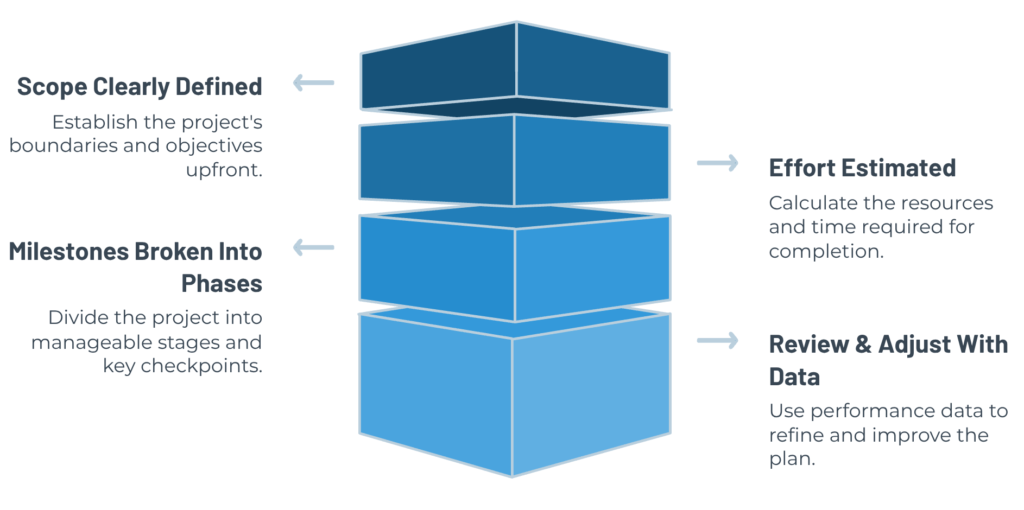
Realistic timelines are grounded in structured planning, capacity awareness, and disciplined prioritization. They reflect what can be delivered with available resources rather than what would be ideal under perfect conditions.
When teams apply founder-friendly product planning, development milestones are tied to validated scope and measurable deliverables. This approach reduces ambiguity and makes it easier to manage trade-offs without derailing momentum. Structured backlog refinement and clear sprint planning improve predictability, which strengthens overall startup execution consistency.
Industry research from McKinsey highlights that projects with strong governance and clear accountability are significantly more likely to meet time and budget targets. Transparent ownership and structured reviews reduce risk accumulation over time. (source)
Understanding how to manage development schedules involves acknowledging uncertainty early rather than reacting to it later. When planning includes buffer time for testing, integration, and iteration, teams protect delivery quality without sacrificing credibility.
Practical Startup Execution Tips For Staying On Schedule
The following startup execution tips provide actionable guidance for founders seeking stronger control over timelines and delivery discipline:
- Define Scope Before Setting Dates– Clear scope boundaries must precede calendar commitments. When timelines are assigned before features are validated and sized, delivery risk increases significantly. Establishing requirements first supports realistic planning and reduces mid-cycle adjustments.
- Break Milestones Into Measurable Phases- Large deliverables create ambiguity that slows progress tracking. Dividing work into discovery, build, testing, and validation phases improves transparency and enables earlier issue detection. This structure strengthens accountability within a reliable software team and improves predictability.
- Align Technical and Business Expectations- Founders and engineers often operate with different assumptions about effort and complexity. Open dialogue ensures that business urgency aligns with technical feasibility. Collaboration with a trusted tech partner for founders supports informed timeline decisions grounded in experience.
- Review Progress With Data, Not Assumptions– Regular sprint reviews and measurable outputs provide evidence of velocity and capacity. Adjustments based on data strengthen confidence and improve resource allocation. Structured reviews also reinforce discipline in how to manage development schedules effectively.
The Impact Of Realistic Planning On Product Quality
When timelines are realistic, teams operate with clarity rather than pressure. Development cycles become more predictable, and testing receives the attention it deserves. Clear sequencing reduces rushed implementation and improves code maintainability.
Reliable planning improves collaboration with any tech partner for founders, especially when expectations are transparent and milestones are defined. Quality assurance processes gain adequate time, reducing post-launch fixes and preserving brand credibility. Strong startup execution discipline enhances stakeholder confidence because progress reflects tangible results rather than optimistic projections.
Founders who embrace structured planning discover that realistic timelines do not slow growth; they stabilize it. Measured pacing improves performance, strengthens team morale, and supports sustainable iteration. Over time, this disciplined approach becomes a competitive advantage.
Bottom Line
Realistic timelines are not conservative decisions; they are strategic commitments that shape the trajectory of a startup. When scope, resources, and milestones are defined with discipline, execution becomes predictable, and performance becomes measurable. Clear timelines reduce friction, protect quality, and ensure that progress reflects deliberate choices rather than reactive adjustments.
The most resilient founders treat planning as an ongoing leadership responsibility rather than a one-time exercise. Continuous evaluation of scope, capacity, and risk keeps development aligned with objectives and prevents small miscalculations from compounding into larger setbacks. This level of operational clarity strengthens startup execution, reinforces accountability, and builds long-term credibility with teams and stakeholders.
For startups seeking to anchor their growth in structured delivery practices, partnering with a startup product development Partner like Toolagen Technology Services can provide the strategic alignment and execution discipline necessary to transform timelines into dependable drivers of product success.
FAQs
- How Can Founders Set Realistic Product Timelines?
Founders can set realistic timelines by defining scope clearly, estimating effort collaboratively with engineering, and incorporating buffer time for testing and iteration. Structured milestone planning and consistent reviews support reliable delivery. Working with Toolagen Technology Services as a tech partner for founders can provide experienced guidance in structuring achievable schedules.
- What Causes Delays in Early-Stage Product Development?
Common causes include unclear requirements, shifting priorities, underestimated technical complexity, and insufficient testing time. Misalignment between business expectations and engineering capacity often amplifies these delays.
- How To Work With Tech Partners To Stay On Schedule?
Clear documentation, shared accountability, and transparent communication are essential. Establishing structured planning processes improves predictability and reduces delivery risk.
- What Strategies Help Manage Startup Execution?
Effective strategies include defined scope boundaries, milestone-based planning, measurable sprint tracking, and proactive risk assessment. Applying structured startup execution tips ensures consistent progress without unnecessary acceleration.
- Can Realistic Timelines Improve Product Quality?
Yes, realistic timelines create space for thorough testing, thoughtful architecture decisions, and careful refinement. When pressure decreases and structure increases, product quality improves alongside delivery reliability.