

Early-stage founders often assume that creating a serious product requires building a large team. The pressure to recruit designers, engineers, and product managers can feel unavoidable, especially when timelines are tight and expectations are high.
Yet many successful teams discover that progress comes faster when execution is structured around capability and clarity rather than headcount. Building your first full team without hiring is about choosing leverage over load and designing a setup that supports learning, delivery, and focus simultaneously.
Why Hiring Too Early Creates Hidden Risk
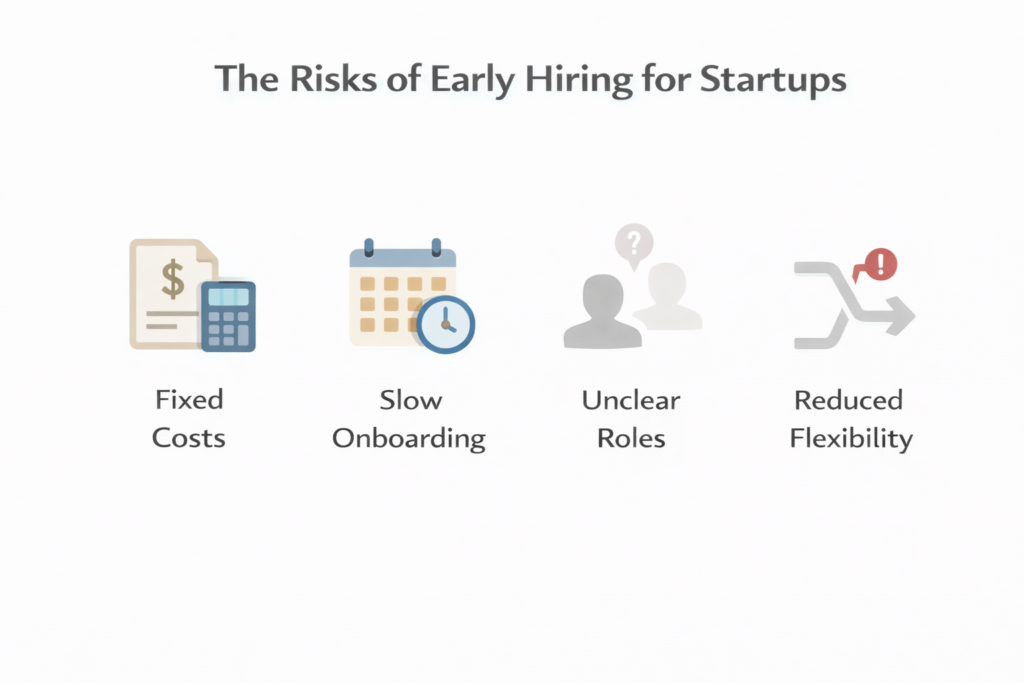
Founders rarely struggle due to a lack of ambition. The challenge is often that early hiring decisions lock them into costs, roles, and assumptions before the product itself has earned that commitment. Recruiting full-time talent too early can lead to mismatched skills, unclear ownership, and long onboarding cycles that slow momentum rather than accelerate it.
For teams exploring how to build a startup team without hiring, the real challenge is not access to talent but access to the right structure. Without a clear product direction, hiring becomes guesswork, and reversing those decisions later can drain both capital and morale.
Recent data shows that about 35% of startups fail because there is no genuine market need for their product, reinforcing why flexibility and early validation matter more than team size. (source)
How Can Founders Execute Without an In-House Team?
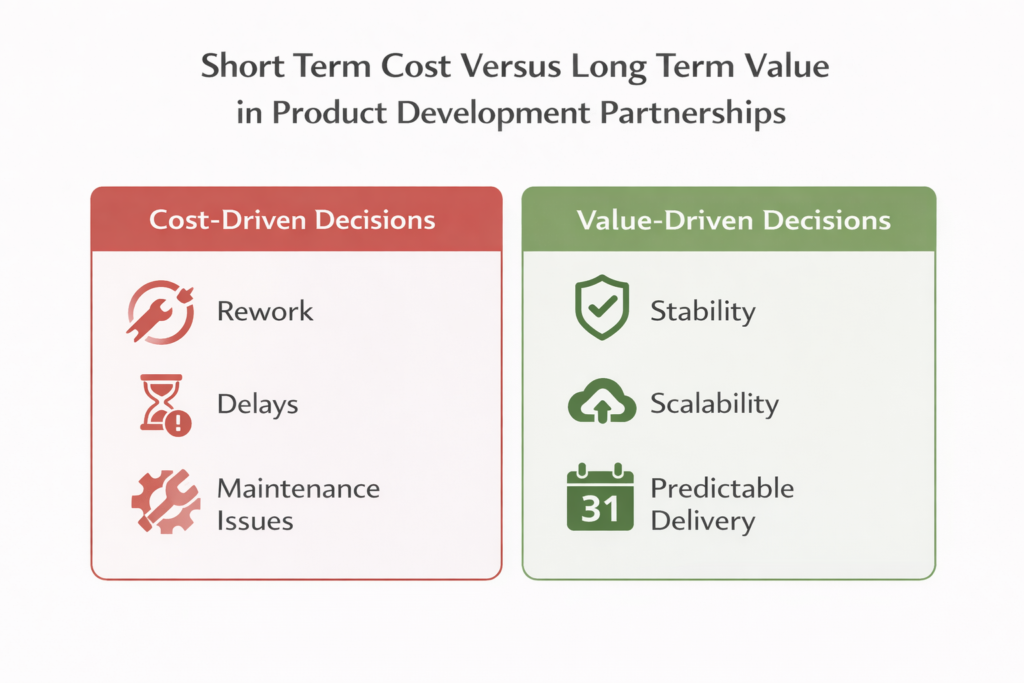
The answer lies in separating ownership from execution. Founders do not need to employ every role to access its output. By working with a startup product development partner, teams gain access to design, engineering, and delivery expertise while avoiding long-term hiring commitments. This approach supports product development without hiring by enabling founders to validate ideas, ship usable software, and learn from real users before committing to permanent structures.
A 2025 Deloitte Global Human Capital Trends analysis highlights that 85 % of business leaders believe agile, flexible ways of working are essential for adapting to shifting priorities and reducing execution risk, making flexible delivery models more effective than traditional hire‑first approaches when speed and adaptability matter most. (source)
Where External Product Teams Add Real Value
External execution works best when it is designed around outcomes rather than simple task completion. A capable product-building company like Toolagen Technology Services contributes to prioritisation, trade-off analysis, and iteration, rather than merely delivering features.
This model allows founders to focus on strategy, customers, and growth while execution progresses predictably.
What Makes This Model Work Well
The following are the reasons why this model works well:
- Clear Ownership And Direction– Founders retain decision authority while execution is handled by experienced teams who understand early-stage ambiguity and evolving requirements.
- Speed Without Long-Term Commitment– Options such as done-for-you product build alternatives allow teams to move forward quickly without committing to permanent roles before direction is validated.
- Access To Ready Made Talent- Models like dedicated startup pods in India provide cross-functional teams that are already aligned, eliminating the overhead of assembling and managing individuals.
- Lower Risk Experimentation- External execution supports learning cycles without the financial and emotional cost of restructuring internal teams.
- Consistent Execution Quality- Experienced partners bring delivery discipline that improves reliability and clarity without constant founder oversight.
When Execution Aligns With Flexibility
Once founders stop equating progress with hiring, execution becomes easier to manage. Teams that adopt external product models report clearer priorities and greater capital efficiency. For founders looking for practical startup team-building tips, the shift lies in measuring progress by validated outcomes rather than roles filled.
Recent research shows that organisations embracing agile and flexible delivery practices can achieve around 30 % faster time‑to‑market compared with traditional models, making it possible to build your tech team fast without sacrificing quality or control. (source)
Moving Forward With Flexible Team Building
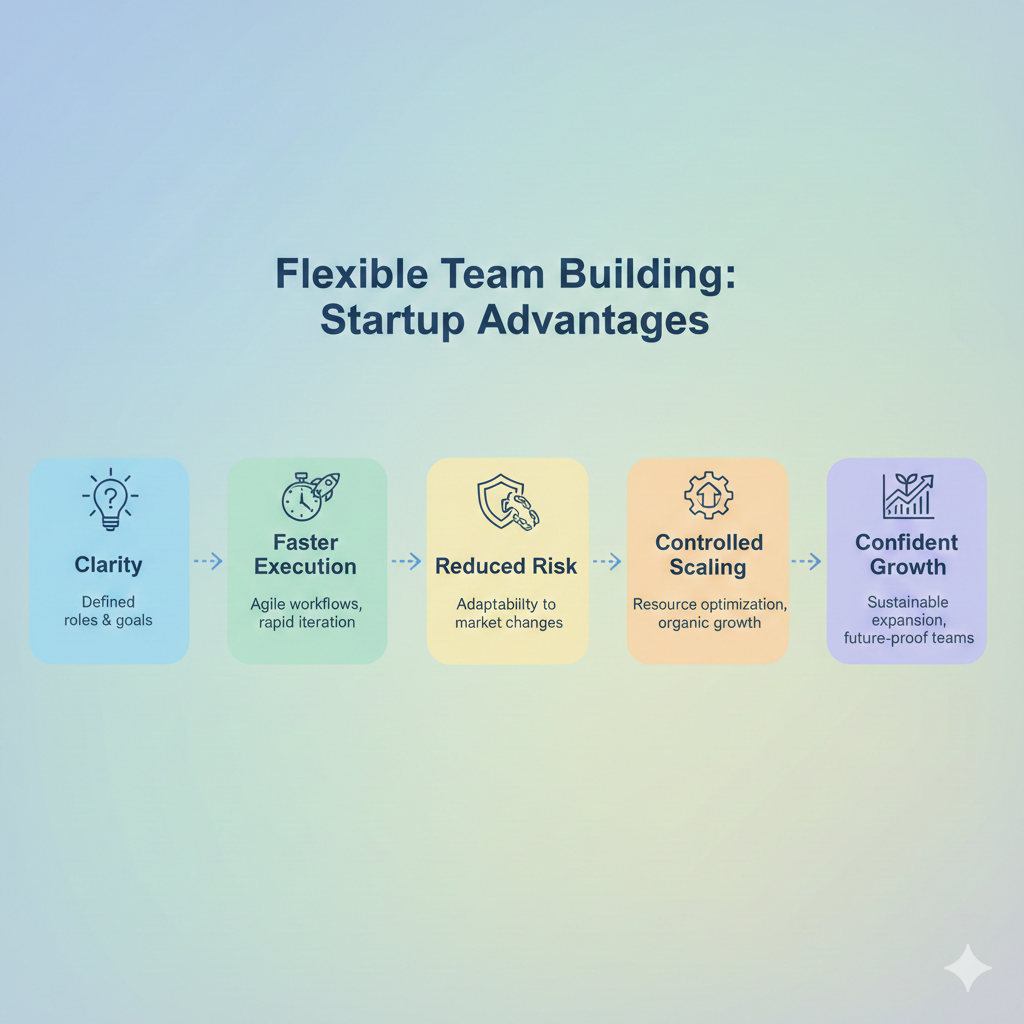
Building momentum early does not require locking yourself into permanent hiring decisions before your product direction is clear. Many founders exploring how to build a startup team without hiring find that execution improves when responsibility is shared with a focused external partner, rather than spread thinly across early hires.
Working with a startup product development partner or an experienced product-building company gives founders access to execution strength while keeping long-term options open. Structures such as done-for-you product build solutions and dedicated startup pods in India support disciplined delivery without the burden of early headcount expansion.
Frequently Asked Questions
- What Is A From Vision to Scale Model?
A Vision to Scale model provides founders with a complete execution setup that typically includes product design, engineering, and delivery under a single engagement. This approach allows teams to move from concept to usable product without assembling and managing individual roles internally.
- How Can I Build A Full Team For My Startup Without Hiring?
Founders can work with external teams that offer cross-functional expertise as one coordinated unit. Toolagen Technology Services operate as an execution extension of the founding team, enabling full product delivery while founders retain ownership and strategic control.
- What Are Dedicated Startup Pods And How Do They Help?
Dedicated startup pods are small, consistent teams assigned to a single product or initiative. This structure improves communication, reduces context switching, and supports continuity across planning, development, and iteration cycles.
- How To Avoid Hiring Mistakes In Early Stage Startups?
Hiring mistakes often happen when founders commit to roles before the product direction is clearly validated. One way to reduce this risk is to test ideas through early execution, prototypes, and real user feedback before building a permanent team. Working with an execution partner such as Toolagen Technology Services allows founders to refine scope, validate assumptions, and understand true team requirements before making long-term hiring decisions.
- Can A Startup Grow Without A Full In-House Team?
Yes. Many startups successfully scale using hybrid models that combine external execution with selective internal hires. Toolagen Technology Services can provide reliable support during these early stages, ensuring execution continuity until building an in-house team becomes strategically necessary.
Reach out to Toolagen Technology Services to see how flexible execution models can help you build confidently, reduce early risk, and scale your product with clarity and control.