

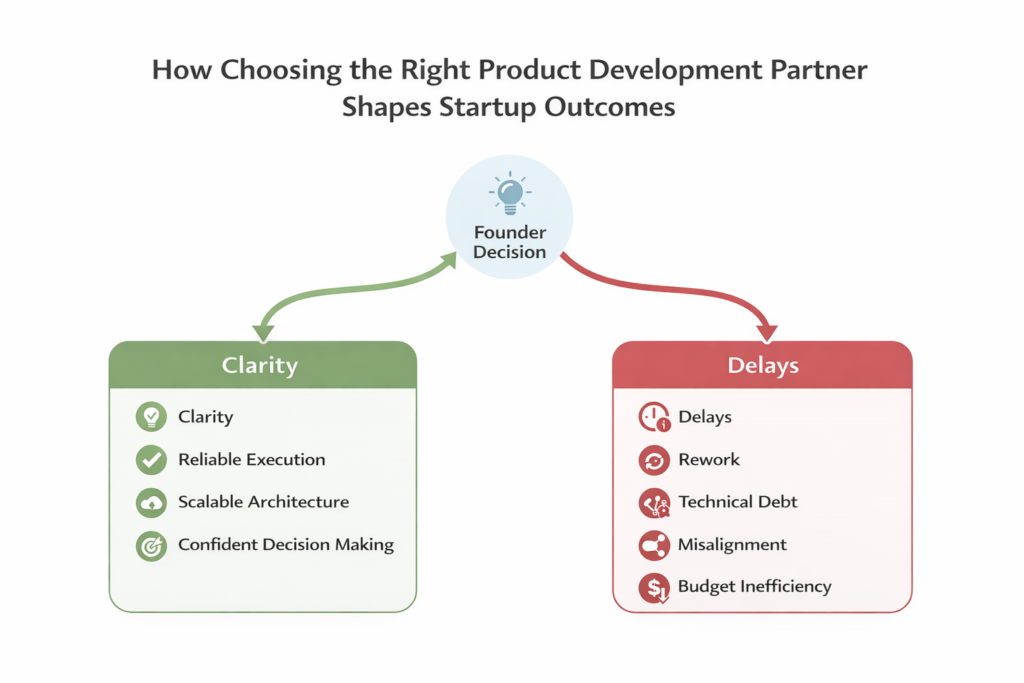
Choosing who builds your product is one of the most impactful decisions founders make in the early life of a company. The right startup product development partner can transform strategic intent into a reliable product, strengthen your execution discipline, and enable your team to focus on growth rather than firefighting. At the same time, an ill-suited partner can cause costly delays, technical debt, and frustration that distract from your core mission.
Success in this area hinges on clarity, alignment, and strategic fit, not only on technical skills, because your partner becomes part of the extended team with a stake in your product’s quality and future.
Why Picking The Right Partner Is Hard For Founders
Founders often struggle with this choice because they lack clear criteria to evaluate potential collaborators beyond superficial markers like price, tool stack, or brand names. Many assume that a well-known firm or the lowest quote automatically equates to a good fit, but this assumption can lead to misalignment on goals, pace of work, communication rhythm, and quality standards.
A common challenge is that early conversations focus on scheduling and tooling instead of understanding whether the tech partner for founders actually grasps the product vision, user needs, and evolving priorities that come with a startup context. The result can be wasted budget, extended cycles, and product outcomes that miss real business value.
What Founders Should Look For Before Hiring
Understanding the right evaluation criteria helps founders weed out partners who look capable but lack the approach needed for early-stage product development. Industry experts emphasize that technical skill is necessary but insufficient without strategic alignment, communication clarity, and a collaborative mindset that matches startup constraints.
What Makes A Development Partner Valuable?
A strong partner goes beyond code delivery; they contribute to product clarity, provide insight into risks and tradeoffs, and support iterative improvement. In fact, a partner’s approach to problem discovery, validation, and prioritization can be as important as their engineering skills.
What Questions Should You Ask When Evaluating A Partner
When founders interview potential partners, the framing of questions can surface alignment issues early. Instead of asking generic questions about technology stacks or pricing, founders should probe how the team handles change, communication, and accountability.
Some questions that reveal depth include:
- How does the team handle scope changes when priorities shift?
- What is the process for resolving disagreements or unexpected risks?
- How does the team ensure quality and long-term maintainability?
- Can they describe examples of how they adapted a project plan after early feedback?
These questions help you understand whether the partner is a product-building company that sees your project holistically or just a vendor focused on task execution.
Key Factors To Evaluate In A Partner
Here are five dimensions founders should evaluate deeply rather than superficially:
- Strategic Alignment With Goals– Technical work should connect directly to business goals and user value. Partners who ask strategic questions about product vision, target outcomes, and how success will be measured are more likely to contribute meaningfully throughout development.
- Communication and Transparency- Frequent, clear updates, structured checkpoints, and transparency about challenges build trust early. Regular status reports, sprint demos, and shared tooling reduce ambiguity and keep both sides accountable.
- Technical and Domain Expertise- Relevant experience reduces risk. Partners with a track record in similar products or industries can anticipate challenges and offer insight that accelerates execution and improves reliability. This includes portfolio reviews and case studies.
- Cultural and Collaborative Fit- Compatibility in work styles, rhythm, and expectations prevents friction. A partner who responds proactively, aligns with your team’s values, and demonstrates mutual respect supports long-term collaboration.
- Post-Launch Support and Scalability- Development does not end at launch. The right partner helps plan for support, maintenance, and iterative enhancements rather than treating the project as a one-off delivery.
Many founders consider regional partners when evaluating the best startup development partner in India or offshore locations known for technical talent. While geography influences cost structures, time zones, and communication patterns, it should not be the primary criterion. What matters most is whether the partner communicates clearly, understands your context, and has experience working in startup environments where change is constant and assumptions are tested regularly.
Price should be considered in the context of value delivered. The lowest quote often leads to hidden costs such as rework, extended timelines, or quality issues, whereas transparent pricing with clear deliverables and milestones supports predictability and trust.
What Happens When The Right Partner Is In Place
When founders secure a partner with the right combination of strategic insight, technical expertise, and communication discipline, product development becomes more reliable and predictable. Decision-making improves because it is informed by shared understanding rather than friction. Execution becomes smoother because priorities are clear and tradeoffs are discussed constructively.
A partner who aligns with your goals and values becomes not just a vendor but a co-creator whose contributions improve product quality, time-to-insight, and long-term success.
Frequently Asked Questions
- How Do I Find The Right Product Development Partner For My Startup?
Start by defining your goals, constraints, and expectations clearly. Product development partners like Toolagen Technology Services demonstrate curiosity about your business and can articulate how their experience aligns with your needs.
- What Questions Should I Ask Before Hiring A Tech Partner?
Ask about their approach to requirements changes, risk management, communication cadence, and quality assurance. Their answers will reveal how they operate beyond technical capability.
- How Much Should A Product Development Partner Cost?
Costs vary based on complexity, scope, and geography. Rather than focusing solely on rates, evaluate the partner’s ability to deliver value reliably and sustainably.
- What Makes A Startup-Friendly Software Team?
Startup-friendly teams understand uncertainty, prioritize learning, and adapt while preserving quality. They support iterative releases and help you refine your product with evidence, not assumptions.
- Should I Work With A Local Or Overseas Development Partner?
Both local and overseas partners can work effectively. Focus on alignment, communication quality, and domain experience rather than geography alone.
Choosing A Partner That Grows With You
Selecting who builds your product is a strategic investment that influences the product’s quality, your team’s morale, and your company’s ability to evolve. Founders who evaluate prospective collaborators on strategic alignment, communication discipline, and long-term support create conditions for stronger execution and fewer setbacks down the line.
If you are exploring how to choose a software development partner who can act as a collaborator throughout your startup’s journey, Toolagen Technology Services value clarity, shared accountability, and seamless collaboration across all stages of development.
Start conversations with partners who don’t just build your product but help you refine it and make it resilient for what comes next.